
What's At Stake for Kids Who Rely on Gender-Affirming Care
Two proposed federal rule changes will make it virtually impossible for kids with gender dysphoria to access gender-affirming care. Learn more about the rule change process and submit your comment in support of 2SLGBTQIA+ kids.
Melissa Duclos
2/4/20263 min read
What are the proposed federal rule changes around funding for gender-affirming care for minors?
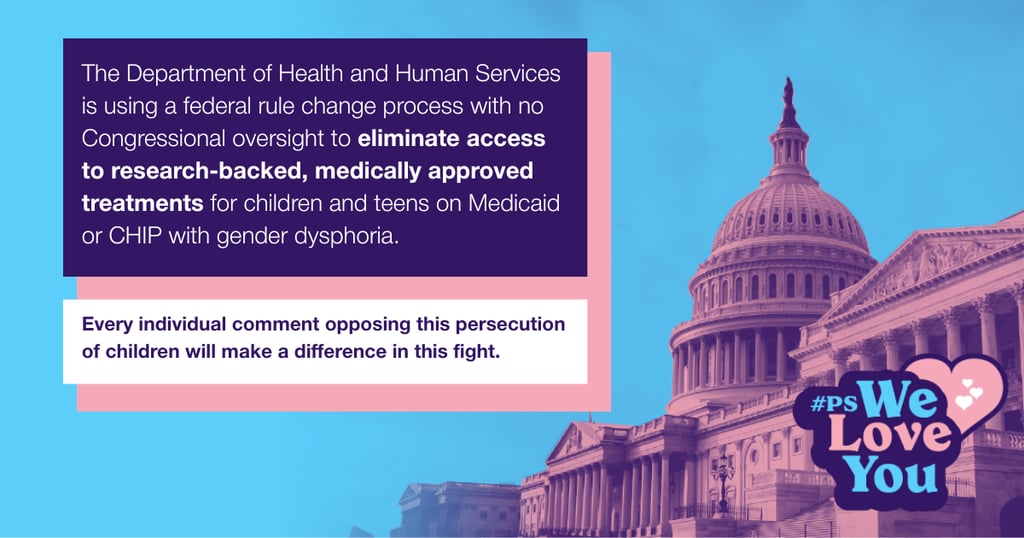
In late December, the Department of Health and Human Services (DHHS) submitted two proposed federal rule changes that will severely impact young people’s access to gender-affirming care (GAC).
One proposed rule change will prohibit children covered by Medicaid or CHIP from accessing GAC through insurance.
The second will withhold ALL Medicaid and Medicare funding from hospitals and other care settings that offer GAC to minors.
What do these proposed changes mean for 2SLGBTQIA+ children and teens?
These rules will have a disastrous impact on children and teens across the country who rely on gender-affirming care to treat gender dysphoria. If these rule changes are allowed to go through:
Kids on Medicaid or CHIP with gender dysphoria will no longer have insurance coverage for their medically recommended mental or medical healthcare.
Hospitals and other care settings that accept Medicare or Medicaid for any of their services will lose all access to federal funding unless they stop offering gender-affirming care to treat gender dysphoria in minors.
Only children with private insurance will have coverage for the medically necessary treatments for gender dysphoria. They will only be able to access this care at the limited number of clinics that accept only private insurance.
Forcing the closure of clinics that provide care to young patients with gender dysphoria will further erode the already overtaxed system of mental health and social service providers serving children.
Does the administration have to go through Congress to make these funding changes?
No. These changes are being proposed through the process of Rulemaking and Judicial Review, which is governed by the Administrative Procedures Act (APA). Under APA, the Department of Health and Human Services must provide adequate notice to the public about a proposed rule change and allow opportunities for the public to comment. Comments submitted through the federal register are published and remain online after the deadline for comment passes.
Does DHHS have to listen to the side with the most comments?
While the APA does not require DHHS to respond to every comment or weigh them as votes, they are required to review all comments and their final rule is supposed to address what would be considered “significant” comments (see para. 4, Informal/Notice-and-Comment/Section 553). This requirement for review means that the total volume of comments submitted to the federal register could help to delay the implementation of these rule changes.
Will the courts get involved to stop this?
Yes, the APA includes a process for judicial review, through which a Court could set aside DHHS’s rule changes as unlawful for being “arbitrary and capricious.” In determining whether agency rules are arbitrary and capricious, the Court in the past has looked at whether the agency in question:
has relied on factors which Congress has not intended it to consider, entirely failed to consider an important aspect of the problem, offered an explanation for its decision that runs counter to the evidence before the agency, or is so implausible that it could not be ascribed to a difference in view or the product of agency expertise. (See para. 3, Arbitrary and Capricious Review Explained, emphasis added.)
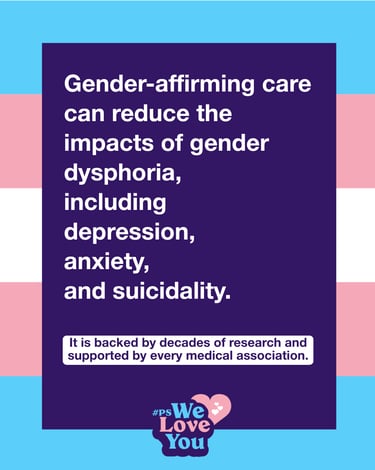
The public comment period for these two rules closes on February 17
The #PSWeLoveYou campaign believes that we must post a massive public response opposing these rule changes so that the public record of this conversation reflects the truth about gender-affirming care and its impact on the entire 2SLGBTQIA+ community, including kids and teens.
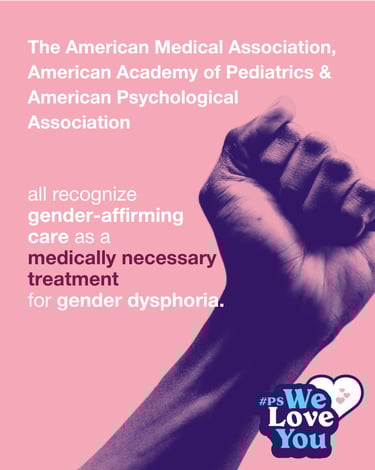
By sharing facts about gender-affirming care and stories of its impact on real families, the #PSWeLoveYou campaign hopes to highlight DHHS’s failure to consider the voices of patients receiving gender-affirming care and the harmful impact of their policies on individuals and our healthcare system.



Click the buttons below to submit comments in opposition to these two proposed rule changes.
Include #PSWeLoveYou and a note of support or encouragement to trans kids.
Our team will find it on the searchable federal register and publish it here as part of a growing demonstration of love and community support for 2SLGBTQIA+ youth.
© 2026. All rights reserved.
CONTACT
Melissa@AmplifyImpactMarketing.com